What Affects Ducted Heat Pump Cost in NZ?
- Free written quote, no obligation
- Licensed electrician on the connection
- Auckland-wide, all major brands
Get a free quote
Free written quote. No obligation. We reply by phone.
Sorry, that did not send. Please try again in a moment.
Thanks, we have your request
We will call you back about your free written quote.
Ducted heat pump cost in NZ depends on what affects the installed price: house size, the number of zones, roof or subfloor access, duct length, electrical work and the brand you choose. House size and access matter most. The labour in the ceiling space or subfloor is a large part of the price. We design each system after a site visit, and you can get a free written quote that lists every item.
What affects the cost of a ducted system
Roof or subfloor access has the biggest effect on labour, and floor area has the biggest effect on equipment. Each factor moves a quote differently.
Floor area and unit capacity
A larger house needs a larger central unit and longer ducts. Capacity is chosen from the floor area, the insulation and the rooms you want heated. See the size guide.
Number of zones
Each zone adds a damper, a controller setting and more ducting. Zoning adds to the job up front and saves power when you only heat the rooms in use. A typical split is a day zone, a night zone and a separate zone for a study or spare room.
Roof space or subfloor access
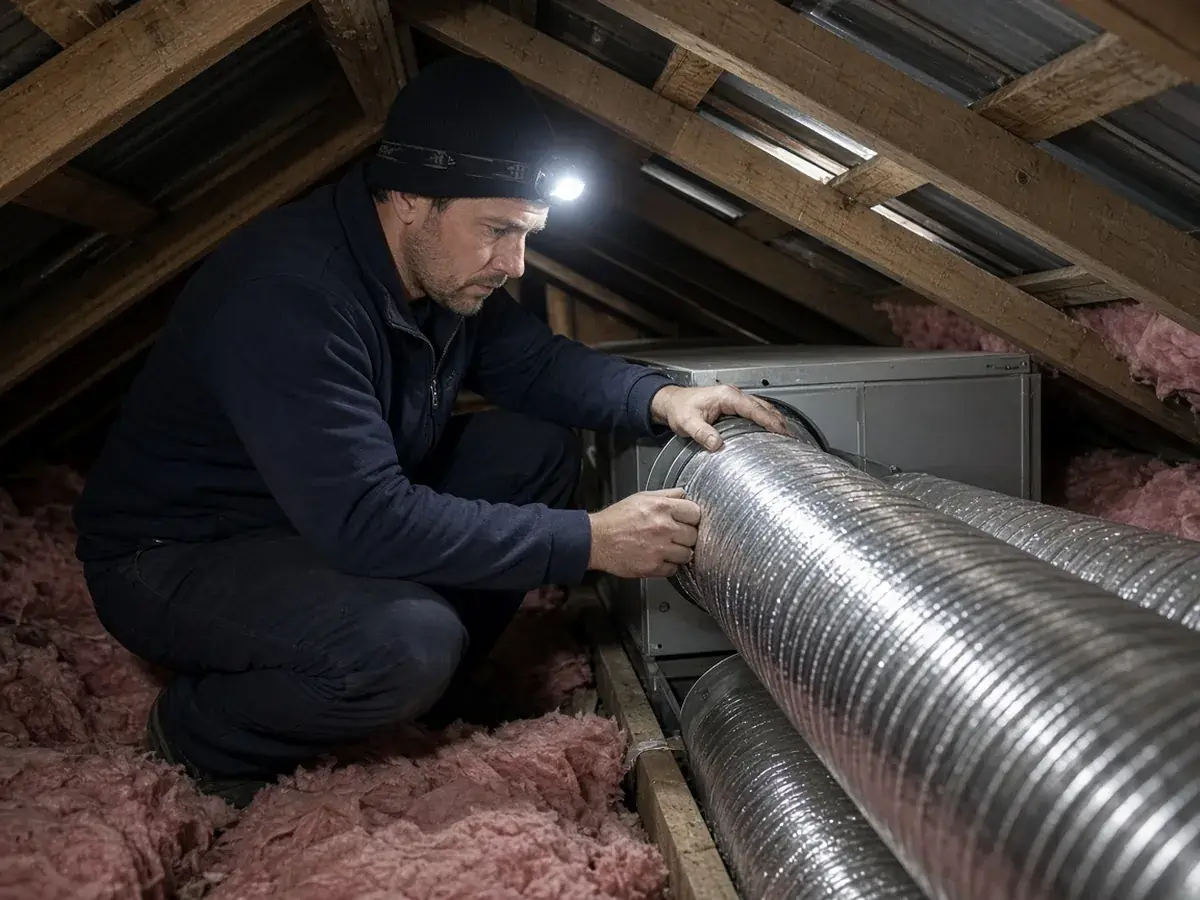
Ducts run through the roof space or under the floor. A roomy roof space with good access is the simplest to work in. A low-pitched roof, a house on a concrete slab with no subfloor, or a roof full of old insulation takes longer. Villas with high ceilings and lath and plaster need extra care.
Duct length and number of vents
More vents and longer runs mean more materials and more hours. Vent positions also matter for comfort, and we place them away from where people sit.
Back-to-back or a long pipe run
The outdoor unit position affects the length of the refrigerant pipework. A short run between the indoor and outdoor units keeps the job simpler.
Outdoor unit placement and brackets
The outdoor unit goes on a pad or brackets. A pad on a sloping section takes more work, and the position affects airflow and noise for your neighbours.
Electrical work and switchboard capacity
A ducted system needs its own circuit, and a licensed electrician connects it. If the switchboard has no spare capacity, an upgrade adds to the job. Older homes are the most likely to need one.
Two storeys and tricky access
Upstairs and downstairs often need separate zones, and access to a first-floor ceiling can be limited. That adds labour.
Removing an old system
If you are replacing an existing system, removal and refrigerant handling may or may not be in a standard quote. Ask whether it is included.
Brand and range
Several brands make ducted ranges, and higher ranges add features such as better controllers and higher efficiency. Our best heat pump guide explains what to compare.
New build or retrofit
A new build is simpler and neater because the ducting is planned with the frame and the ceilings are open. A retrofit means threading ducts through an existing house and patching ceiling access holes afterwards. A retrofit into a villa or an older weatherboard takes more planning than a modern single-storey home.
Ducted, multi-split or wall units
For a house of several rooms where you want every room comfortable, compare all three options.
| Option | Best for |
|---|---|
| Separate wall units | Heating one to three rooms |
| Multi-split | Several rooms, one outdoor unit |
| Ducted | Whole house, even heat, hidden vents |
Ducted is usually the largest up-front investment and the only option with no visible indoor units. It suits larger homes, open-plan layouts and owners who plan to stay. For a small home, or a house where you only heat the lounge and a bedroom, wall units are usually the better fit. We compare the options on the visit and tell you if wall units will do.
Grants and finance
The Warmer Kiwi Homes grant, capped at $3,450, only covers a single high-wall heat pump, not ducted systems. Our grants and subsidies guide lists who qualifies for a single unit. Some lenders offer home improvement loans, so check current offers and read the terms.
Running costs and servicing
Ducted systems use more power when they heat the whole home and less when you use zones, so zoning is where the savings are. Insulation matters most, because a well-insulated house needs a smaller system and loses less heat. Service the system every year. See heat pump servicing.
What a good ducted quote includes
- The brand, model and capacity of the unit
- The number of zones and the number of vents
- Where the ducts run, and where the central unit and outdoor unit go
- The electrical connection and any switchboard upgrade
- Making good of ceiling or floor access holes
- Commissioning, a walk-through and the controller setup
- Manufacturer warranty and workmanship cover
- A clear total
If one quote is far lower than the others, find out what it leaves out. Our installation cost guide covers how to compare quotes line by line, and ducted heat pumps explains how the system works.
Get a free ducted quote
We visit, check the roof space or subfloor, plan the zones and send a written quote with a layout.
Talk to a person about this job.
Questions
What decides the cost of a ducted heat pump?
Floor area and capacity, the number of zones, roof or subfloor access, the length of the duct runs and number of vents, electrical work and the brand and range. House size and access matter most.
Why does ducted cost more than a wall unit?
A ducted system has a larger central unit, a network of insulated ducts, vents in the rooms you choose, a controller and more labour in the roof space or subfloor. A wall unit is one indoor unit and a short pipe run.
Is a ducted system cheaper than several wall units?
Not usually up front. For a whole house, several wall units or a multi-split can cost less at the start. Ducted gives even heat, no wall units and one outdoor unit.
Does ducted cost more to run?
It depends on the system size, the zones you use and how well insulated the house is. Heating only the zones you need keeps the bill down, and insulation makes the biggest difference.
Can I get a grant for a ducted heat pump?
No. The Warmer Kiwi Homes grant only covers a single high-wall heat pump, not ducted systems.
Does the quote include electrical work and making good?
A proper quote states whether the electrical connection, any switchboard upgrade and patching of ceiling access holes are included. Ask for them to be listed.
How do I get an exact figure for my house?
Ask us for a free written quote. We check the roof space or subfloor, plan the zones and list every item with a layout.
What is cheaper to run, a ducted or a split system?
It depends on how you use them. A ducted system with zones heats only the areas you choose, while a single wall unit heats one room. Heating the whole home all day costs more than heating one room for a few hours.
New build or retrofit: what is the cost difference?
A new build is usually simpler, because the ducting is planned with the frame and the ceilings are open. A retrofit needs more labour to thread ducts through an existing house and patch access holes.
How long does a ducted system installation take?
Several days, and most of the work happens out of sight in the roof space or subfloor. Your quote gives the timeframe.
Get a free quote
Tell us the address and the job. We will call you back.
Request a callbackFree written quote. Licensed electrician. Auckland-wide.
Tell us about the job
Free written quote. No obligation. We reply by phone.
Sorry, that did not send. Please try again in a moment.
Thanks, we have your request
We will call you back about your free written quote.