Best Heat Pump Brands in NZ
- Free written quote, no obligation
- Licensed electrician on the connection
- Auckland-wide, all major brands
Get a free quote
Free written quote. No obligation. We reply by phone.
Sorry, that did not send. Please try again in a moment.
Thanks, we have your request
We will call you back about your free written quote.
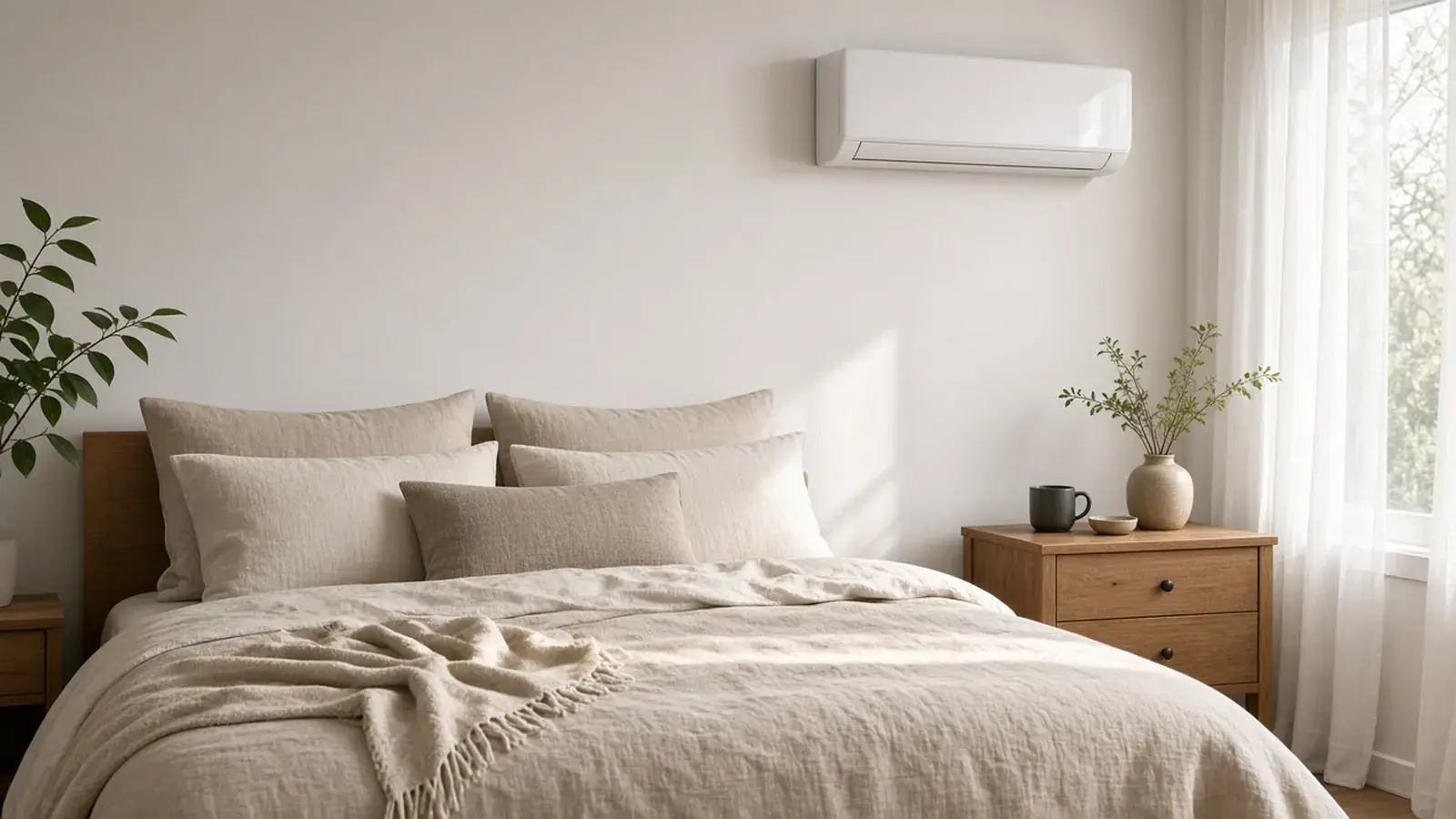
The best heat pump in NZ is the one sized for your room, fitted well and made by a reliable brand with spare parts and technicians nearby. Mitsubishi Electric, Daikin, Fujitsu and Panasonic are four brands Auckland homeowners commonly choose, and any of them can be the right answer. We install all four and will tell you which suits your room. Get a free quote and we will recommend a brand and size.
Which room needs what
Match the unit to the room before you compare brands.
| Room | What matters most | What to look for |
|---|---|---|
| Main bedroom | Low noise | A small, quiet wall unit sized for the room |
| Living room, used daily | Output and efficiency | A mid-range or higher wall unit with a good efficiency rating |
| Open-plan living | Capacity and air movement | A larger wall unit, two units or ducted |
| Spare room | Simplicity | A basic model |
| Villa lounge | Wall space and high ceilings | A floor-mounted unit |
| Whole house | Even heat everywhere | A ducted system |
Our size guide explains how to pick the capacity for each room.
Mitsubishi Electric
People choose Mitsubishi Electric for quiet running and build quality. It makes every type from small wall units to ducted systems. See Mitsubishi Electric heat pumps.
Daikin
Daikin specialises in air conditioning and heat pumps, and people choose it for efficiency and a wide range. Its ducted ranges suit larger homes. See Daikin heat pumps.
Fujitsu
People choose Fujitsu for reliable performance and simple controls. Auckland installers know the units well, and the range covers wall, floor, cassette and ducted models. Fujitsu wall units are a popular choice for rentals. See Fujitsu heat pumps.
Panasonic
People choose Panasonic for a familiar name, tidy styling and a range from bedrooms to larger spaces. Some models add air-quality features. See Panasonic heat pumps.
Independent reviews
Consumer NZ tests and reviews heat pumps, and its reports are a useful independent source.
Other brands
Other brands, including Toshiba, Hitachi, Haier and Midea, are also sold in New Zealand. If you have one already, we can service and repair it.
Questions to ask any installer
- Which exact model and rated heating capacity are you quoting?
- Who makes the electrical connection, and are they licensed?
- How much pipework is included?
- What warranty comes with the unit, and what cover does the installer give on the work?
- Who do I call if something goes wrong, and how fast do they attend?
We answer all five in the written quote.
What to look for when you compare
- Capacity. Compare the rated heating output in kilowatts, because the model number can mislead.
- Efficiency rating. Check the energy rating label, especially for a unit that runs all year. The most efficient models tend to be in the higher ranges.
- Noise. Check the indoor sound level in the specifications, particularly for bedrooms.
- Features. Wifi, a quiet mode and a good filter are worth having. Motion sensors and air-purifying modes are optional extras on premium models.
- Parts and service. Choose a brand that local technicians know and can get spare parts for. Parts availability matters most once a unit is a few years old.
- Warranty. Compare the manufacturer's warranty and the installer's workmanship cover. Terms vary by model and purchase date.
- The installer. A neat, correct installation matters as much as the brand.
Heat pump or other heaters
A heat pump is the best choice for most Auckland living rooms and bedrooms. It moves heat in from outside, so it uses less power than a plug-in electric heater for the same warmth, and it cools and dries the air in summer.
- Plug-in electric heaters suit a spare room used rarely.
- Gas heaters need a flue and a gas supply, and unflued ones add moisture to the room.
- Wood burners heat a room well and need a flue, fuel, storage and regular cleaning.
- Heated towel rails and heated floors work as extras, not as the main heating for a living space.
For a whole house, compare ducted, multi-split and wall units. See our ducted heat pump cost guide.
Inverter units and refrigerant
Choose an inverter heat pump. An inverter unit turns its output up and down to hold the temperature, so it runs quieter and uses less power than an older on-off unit. Most new heat pumps are inverter models, and the specifications say so. New units commonly use the R32 refrigerant. Ask your installer which refrigerant your unit uses, because it affects servicing.
Mistakes to avoid
- Buying the biggest unit to be safe. It can blow too hard.
- Comparing brand names and ignoring the installation.
- Choosing on the label alone. Check the quote includes pipework, electrical work and a handover.
- Ignoring noise. A loud indoor unit in a bedroom is a daily irritation.
- Skipping servicing. A neglected unit loses efficiency and can leak.
Best heat pump by type
- Wall-mounted: the standard choice for lounges, open-plan areas and bedrooms.
- Floor-mounted: villas, bungalows and rooms with limited high wall space.
- Ceiling cassette: large rooms and offices where wall space is short.
- Multi-split: several rooms from one outdoor unit, useful on narrow sections and in townhouses.
- Ducted: whole homes where you want even heat and no wall units.
Best heat pump for Auckland conditions
- Damp homes: choose a unit with a dry mode, keep the filters clean and have it serviced yearly.
- Coastal homes: a sheltered outdoor unit position matters more than the brand, and a yearly service catches corrosion early.
- Villas and bungalows: a floor-mounted or high-wall unit above the sash windows.
- 1970s and 1980s family homes: a larger wall unit or ducted.
- Apartments and townhouses: confirm body corporate approval and a quiet outdoor unit position before you buy.
- Rentals: see Healthy Homes heating.
Floor-mounted or wall-mounted
Choose a wall unit unless the room gives you a reason not to. Choose a floor-mounted unit when windows, doors or a sloping ceiling leave no high wall, as in many villas and bungalows. A floor unit also heats from a low level, which warms the area where people sit.
Looking after it
Any brand lasts longer when it is looked after. Wash the filters every month, keep the outdoor unit clear and book a yearly service. If something goes wrong, heat pump repairs covers the common faults. Our installation cost guide and grants guide cover the money side.
Our recommendation
Choose the capacity for the room, the type for the house and then the brand that fits the local support. Get two or three written quotes and compare them line by line. If you want us to look at your house, we will recommend a brand and size and say so if a simpler unit will do.
Talk to a person about this job.
Questions
What is the best heat pump brand in NZ?
No single brand is best for every home. Mitsubishi Electric, Daikin, Fujitsu and Panasonic all make reliable heat pumps, and the right size and a tidy installation matter as much as the badge. The best choice depends on the room and who will look after the unit.
Which heat pump is the quietest?
Noise depends on the model and the capacity, not only the brand. Compare the indoor sound level in the specifications, and choose a bedroom model rather than a high-output living room unit for sleeping areas.
What is the best heat pump for a bedroom?
A small, quiet wall unit sized for the room. Bedrooms need less capacity than living areas, and a larger unit than you need can blow a stronger draught.
What is the best floor-mounted heat pump?
Several brands make floor-mounted units. They suit villas and rooms with little high wall space, because they sit low and heat from floor level. We recommend a model after seeing the room.
Is a basic heat pump good enough?
A basic model can be fine for a spare room used a few nights a month. For a living room or bedroom used daily, a better unit often pays back in comfort. Whatever you choose, a poor installation spoils it.
How long should a heat pump last?
A well-installed, regularly serviced heat pump commonly lasts 10 to 15 years. A sheltered outdoor unit position helps, and coastal sites need extra care because salt air corrodes the outdoor coil.
Are smart wifi heat pumps worth it?
Wifi control lets you switch the heat on before you get home and is worth it if you will use it. It is a feature, not a reason to choose a brand.
Should I leave my heat pump on all the time?
A steady setting of around 20 to 21 degrees in winter generally works better than switching on and off. Use the timer so the room is warm when you need it.
Is it worth using dry mode?
Yes, on muggy days. Dry mode removes moisture from the air with little cooling, which helps with condensation and that clammy feel.
Which is better, Daikin or Mitsubishi?
Both make reliable heat pumps in every type. The right choice depends on the room, the features you want and the local support. We install both and recommend the one that fits your home.
Get a free quote
Tell us the address and the job. We will call you back.
Request a callbackFree written quote. Licensed electrician. Auckland-wide.
Tell us about the job
Free written quote. No obligation. We reply by phone.
Sorry, that did not send. Please try again in a moment.
Thanks, we have your request
We will call you back about your free written quote.